Your first camper trip does not need a heroic itinerary. It needs a sensible first day, a small number of good options and enough space in the plan to learn how the vehicle fits into your rhythm.
At Cumbres Camper, the journey starts in Benitachell on the northern Costa Blanca. That makes it easy to begin locally, with the coast around Jávea and Moraira on one side and inland Alicante on the other, before deciding whether to travel farther. The aim of this guide is not to prescribe one route. It is to help you build a trip that still feels enjoyable when the weather, traffic or your own curiosity changes the plan.
Start with the shape of the trip, not a list of attractions
Open a map and choose one broad direction. Then identify a small number of places that genuinely matter to you. A first-time itinerary works better when each day has one main idea—coast, walking, a historic town or simply a slower day—rather than a chain of stops that all depend on perfect timing.
A practical route has three layers:
1. A preferred overnight option. Check its current access rules, arrival arrangements and availability directly with the operator or municipality.
2. A legal alternative. Conditions can change, particularly in busy coastal areas or during local events.
3. A shorter version of the day. If the road, weather or energy level says “stop”, the trip should still work.
For a gentle introduction, you could collect in Benitachell and keep the opening stage around Jávea or Moraira. Treat these as places to explore, not as promises of overnight parking: always follow the signs and current local rules. Our local pages on camper hire near Jávea / Xàbia and camper hire near Moraira give useful context before you decide where to go.
If a ready-made local sequence would help, use the slow three-day Costa Blanca route from Benitachell as a flexible example rather than a fixed checklist.
Learn the camper before the road becomes the main event
The handover is part of the trip, not an obstacle before it. Give it your full attention. Ask where the controls are, how the water and electrical systems are monitored, how every cupboard and travel seat is secured, and what must be checked before moving away.
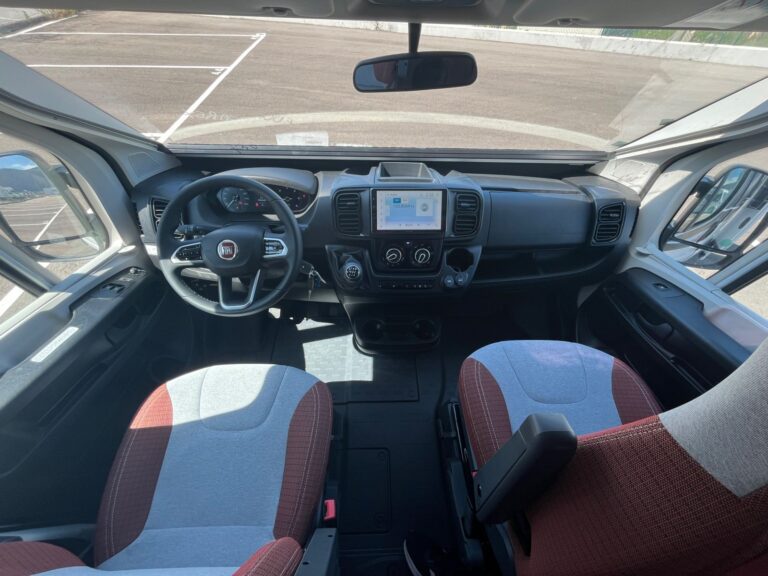
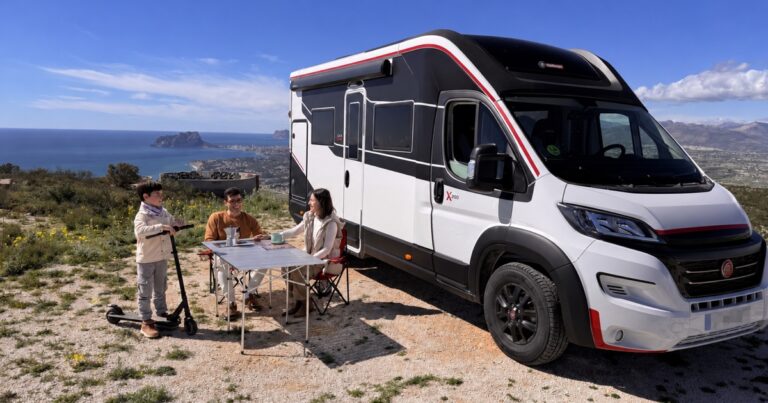
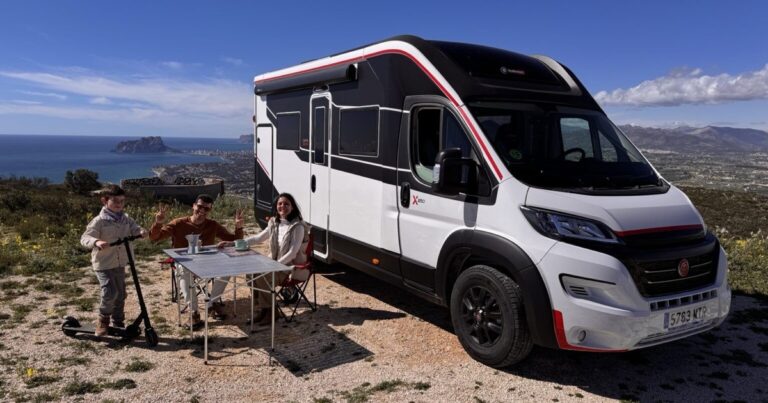
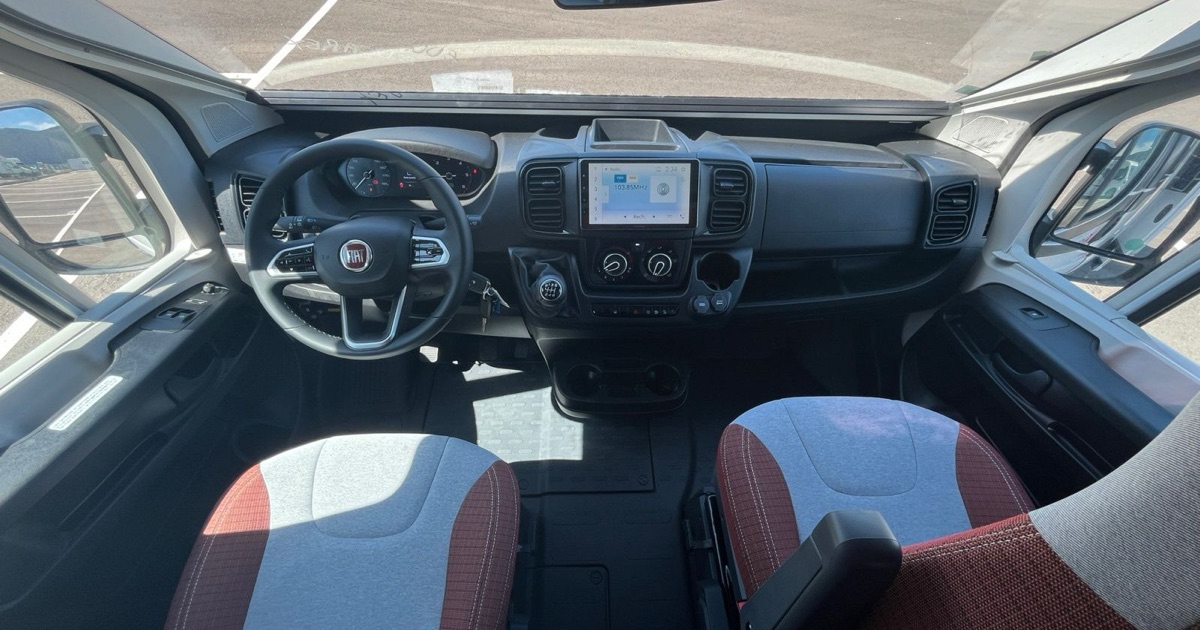
The Challenger X250 has four homologated travel seats and sleeping space for up to four people. Its everyday layout includes a two-burner hob, a 150-litre fridge, a fixed toilet, a separate shower, adjustable wardrobe space and a spacious garage. Those features make a first trip more comfortable, but they still require a routine: put loose items away, close doors and drawers, and make a final walk around the vehicle before driving.
If several people are travelling, agree on simple roles. One person can check the exterior and the space around the vehicle; another can secure the interior. A short spoken checklist is much more reliable than assuming someone else has done it.
Understand the difference between parking and camping
Spain is not one unlimited campsite. National traffic rules, municipal regulations, protected areas and site-specific signs all matter.
The DGT's updated 2026 motorhome guidance distinguishes a legally parked vehicle from camping activity. In practical terms, when you are parked:
- the vehicle must occupy the space in the permitted way and comply with the signs;
- nothing should extend beyond the vehicle's perimeter—no awning, table, chairs or other outdoor setup;
- the vehicle must not discharge fluids onto the road or public space;
- noise and other activity must not disturb the surrounding area.
Municipal authorities can regulate parking and access within their powers, so a rule that applies in one town should never be assumed to apply in the next. Read the current signs on arrival and check local information, especially near beaches, natural areas and historic centres. The official DGT motorhome guidance and its 2026 update on motorhome parking and camping are the best starting points for national rules.
When you want to put out furniture, use an awning or rely on campsite services, choose a campsite or authorised motorhome area that permits those activities. Never empty grey or black water anywhere except an authorised service point.
Make the first driving day deliberately easy
A motorhome asks for more anticipation than a car. Leave more room when turning, watch the mirrors, and remember the height and width before entering a car park, fuel station, narrow street or tree-covered access road. A navigation app can help with direction, but it cannot replace a visible restriction sign or the driver's judgement.
Before departure:
- confirm that the named drivers meet the rental and licence requirements;
- check the weather and official travel information for the route;
- save the contact details for the overnight option and its alternative;
- note where you can obtain fuel and use authorised water or waste facilities;
- avoid making a tight historic centre your first driving challenge;
- allow enough daylight for the first arrival and setup.
The X250 includes ESP, Traction+ and hill descent control as driver-support features. They assist the driver; they do not replace a cautious speed, safe spacing or a decision to change the route when conditions are unsuitable.
Pack for how you will use the space
The common first-trip mistake is not forgetting an exotic gadget. It is bringing too much ordinary stuff.
Soft bags are easier to place in the adjustable wardrobe and garage than a collection of rigid suitcases. Pack clothing in small groups, keep wet or outdoor equipment separate, and make sure the items needed during the day are accessible without dismantling the sleeping area.
A useful short list includes:
- personal documents, medication and suitable footwear;
- layers for the actual forecast, including cooler evenings away from the coast;
- charging cables and only the devices you expect to use;
- a compact food plan for the first day rather than an entire expedition shop;
- any child equipment or specialist gear agreed in advance;
- a small torch for arrivals after dusk, even if the plan is to arrive earlier.
Check what is included before packing bedding, towels or kitchen items. The camper hire FAQ answers common questions, and Javier can help in English while Ana can help in Spanish if your group has a specific requirement.
Build a simple routine on board
Life in a camper becomes easy when small actions happen in the same order.
Before driving
Secure cupboards and loose items, check the bathroom and kitchen, confirm that passengers are in the designated travel seats, look around the exterior and make sure the route out is clear.
During the day
Keep an eye on water and waste levels rather than waiting for a warning at the least convenient moment. Use authorised facilities and leave time to complete service tasks properly.
Before the night
Confirm that you are allowed to stay, check the signs again, keep everything within the vehicle if you are parked rather than camping, and prepare the sleeping space before everyone is tired.
Before leaving
Look inside, outside and underneath the immediate area. Leave no waste behind, close every opening and do one final perimeter check.
Use Benitachell as a calm starting point
Starting locally gives you room to learn the vehicle without sacrificing the feeling of a real trip. Xàbia's official visitor information highlights a coastline of viewpoints and protected landscapes, while Moraira and Teulada combine coves, a coastal castle and an inland historic centre. These are reasons to slow down and choose what interests you—not invitations to take a large vehicle into every scenic or historic space.
Walk the final section when that is the sensible choice. Park only where the X250 fits legally and without obstructing anyone. If a location is busy or unsuitable, use the alternative you planned rather than forcing the day to match a photograph.
Your first trip should leave room for a second one
The best first camper journey is not the one that covers the greatest distance. It is the one that teaches you what kind of road days, stops and onboard routines you enjoy.
Explore the Challenger X250 in detail, review the current rates, then check availability. If you are unsure whether your plan suits the vehicle or the season, contact Cumbres Camper before fixing the route.
Share the road