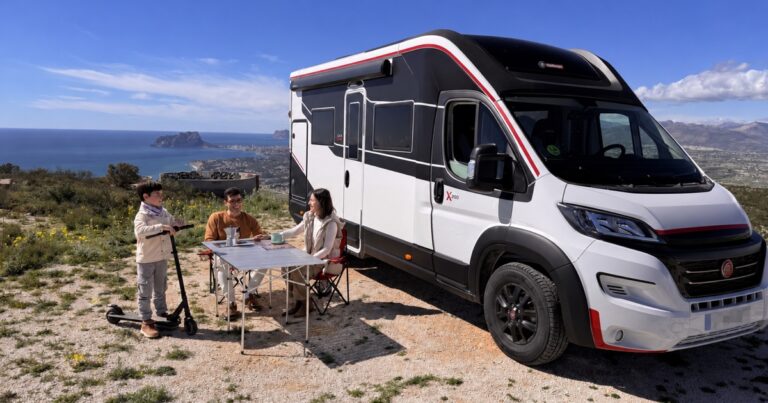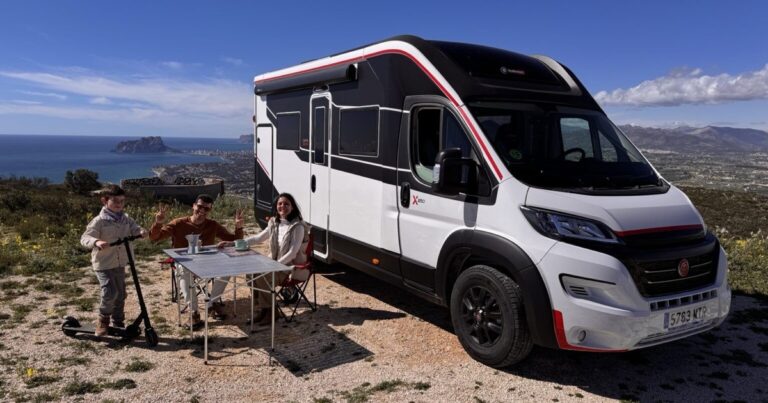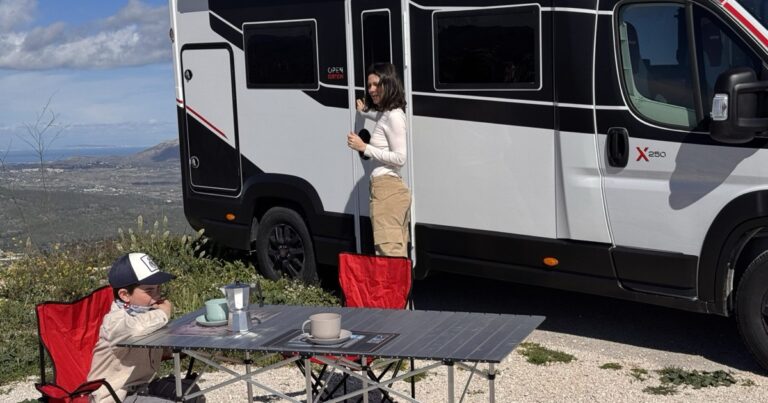
A winter camper trip on the Costa Blanca is not a summer itinerary with a different jacket. The days are shorter, conditions can change, some attractions and services may use seasonal hours, and the choice between the coast and the mountains deserves more thought.
That does not make winter a poor time to travel. It makes flexibility more valuable. With collection in Benitachell, you can keep a coastal plan around Jávea, Moraira, Benissa, Calpe or Dénia, consider an inland day when conditions are suitable, and shorten the route without losing the feeling of a real trip.
The aim of this guide is to help you make those decisions safely and calmly. It does not promise a particular forecast, an empty car park or an open attraction. Those details must be checked for the dates you actually travel.
Start with two possible trips, not one rigid route
Before choosing every stop, build two versions of the journey.
A coastal version
The coast gives you towns, viewpoints and walks that can be combined without turning every day into a long driving stage. The official tourism portal for the Region of Valencia highlights the contrast between coves, historic towns and natural parks across Alicante province. Its 2026 guide to the province's recognised coastal trails also includes routes in Benissa, Calpe, Dénia and Teulada-Moraira.
Use those places as ideas rather than promises. A path may be unsuitable after bad weather, access can change and a place that works for a walk is not automatically a legal overnight stop. Check the destination's official information and the signs you find on arrival.
From Benitachell, Jávea / Xàbia, Moraira and Dénia can all form part of a coastal plan. Choose the day's direction from the current information rather than trying to join every town into one fixed itinerary.
An inland alternative
Alicante is not only a coastal province. The official regional tourism site describes it as one of Spain's most mountainous provinces, with valleys, ravines and several natural parks. That variety can make an inland day a rewarding counterpoint to the sea.
It also means that a coastal forecast should not be treated as an inland forecast. The Region of Valencia's official winter information identifies snow as a possibility in some inland valleys and mountain areas of Alicante. That is context, not a prediction for your trip. Check the actual forecast, warnings and road conditions before deciding to leave the coast.
If conditions are uncertain, keep the inland idea for another journey. A flexible day in a coastal town is a better result than forcing a route because it was written into the plan weeks earlier.
Check the forecast as a route decision, not a formality
The most useful winter habit is a short official-information check at the right moments: before departure, before changing area and again before an exposed walk or inland stage.
Start with the AEMET forecast for Benitachell. AEMET notes that a municipal forecast represents the municipal capital and that conditions can vary within a municipality, particularly where altitude changes. Then consult the AEMET warnings for Alicante. Its Meteoalerta service provides updated information on potentially adverse phenomena; it should be checked close to the journey rather than copied into a permanent itinerary.
For the road itself, use the DGT live traffic and incident information. The page includes current traffic incidents and specific information when roads are affected by flooding, ice or snow. The DGT also makes clear that its online information does not replace signs or instructions on the road.
A practical decision sequence is simple:
- Check the municipal forecast for the place you intend to visit, not only the collection point.
- Check AEMET warnings for the relevant area.
- Check the DGT traffic map and current incidents.
- Confirm the destination's current access and opening information.
- Change the route when any of those checks makes the original plan a poor choice.
Build each day around winter daylight
Winter gives you less daylight for driving, finding a legal place to stop and understanding an unfamiliar site. A plan that looks relaxed on a map can become hurried when several visits are placed late in the day.
Choose one main idea for each day and keep the final stage simple. If you want a walk, make it the centre of the day rather than something squeezed in before dusk. If you are using a campsite or authorised motorhome area, check its current arrival arrangements directly. Do not assume that reception hours, services or availability are the same throughout the year.
Earlier arrival also gives you time to check the surrounding signs and prepare the vehicle without rushing. A torch is useful, but it should support a sensible plan rather than compensate for a deliberately late arrival.
If you want a route framework, begin with our slow three-day Costa Blanca camper route from Benitachell. In winter, treat each day as optional: shorten it, reorder it or replace an exposed outdoor stop when the current information says you should.
Adjust the driving, not only the destination list
Rain, fog, wind and low winter light reduce the margin for error in a larger vehicle. The DGT's current driving recommendations advise reducing speed and increasing the safety distance when visibility or grip deteriorates. In extreme conditions, the safer decision may be to stop away from the carriageway in a suitable place until it is safe to continue.
Before moving away, confirm the day's route, secure cupboards and loose equipment, and keep a warm layer within reach. Allow time for a shorter stage or an alternative road. A navigation app can suggest a direction; it cannot override a height restriction, closure, local sign or the driver's judgement.
Parking and camping rules do not disappear in winter
A quieter location is not an unregulated location. On public roads, park only where permitted, within marked bays and time limits, and keep awnings, furniture and levelling equipment inside the vehicle's footprint. Camping is for authorised sites; always follow local signs.
If you want to set up outside the vehicle or need formal water and waste facilities, choose a campsite or authorised motorhome area that permits those activities. Confirm winter opening, services and availability directly with the operator, and use authorised service points for water and waste.
Use winter to choose a different kind of day
The value of a winter journey is not a promise that every summer location will be empty. It is the chance to plan around a different rhythm.
A coastal walk with a current conditions check
The official regional guide to Alicante's Senderos Azules lists recognised coastal routes in places including Benissa, Calpe, Dénia and Teulada-Moraira. Select one route that suits the group, then check local access, weather and path conditions before setting out. Wind, rain or recent damage can change whether an exposed coastal walk is sensible.
A town-focused day
Historic centres, markets, museums and a relaxed meal can create a complete day without depending on a long outdoor route. Check official opening information and choose legal parking that suits the X250. Walk the final section or use an appropriate local connection when a centre is narrow or access is restricted.
An inland day only when the information supports it
The mountains and valleys of Alicante add variety, but they should not be treated as a guaranteed winter alternative. Check the forecast for the inland destination, not the coast, and check the DGT map before leaving. If the conditions or road information are unsuitable, stay with the coastal version of the plan.
Make the Challenger X250 work for the season
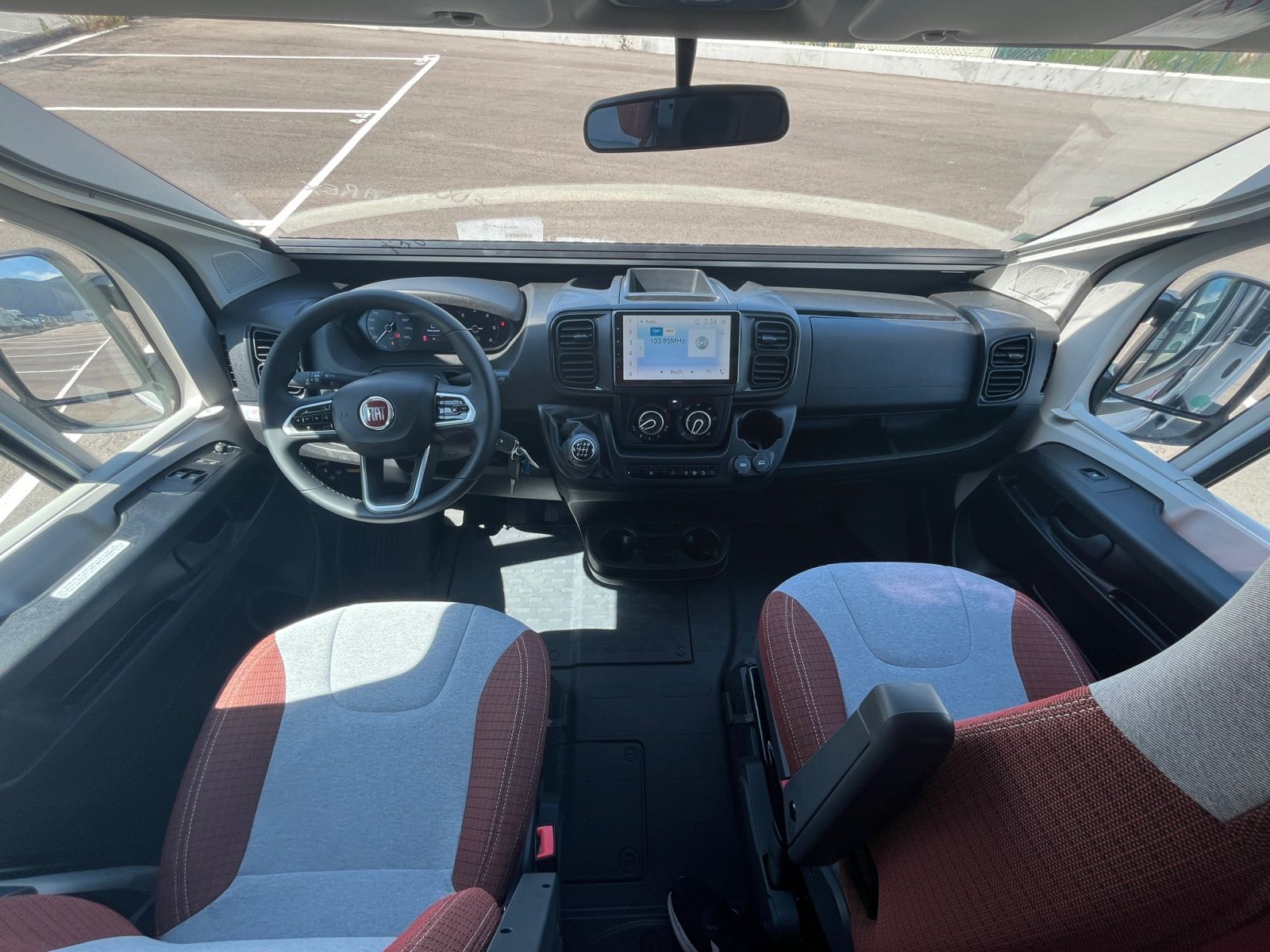
The English overview of the Challenger X250 explains the vehicle and the Benitachell collection point. In winter, the useful difference is not a longer equipment list; it is having an organised interior when an outdoor plan becomes shorter.
Give wet coats and footwear one defined place so moisture does not spread through the living area. Use ventilation and onboard systems exactly as explained during handover, never block vents and do not introduce an unapproved heater. The kitchen makes a simple meal possible when the timetable changes, while the fixed bathroom gives the group more independence. Water and waste capacity are still finite, so plan authorised service stops before they become urgent.
A couple carrying walking equipment may use the garage differently from a family with several soft bags. Read the camper hire FAQ and ask the team if you are unsure whether your equipment suits the storage available.
Add a few winter-specific items
Pack layers, a waterproof outer layer, footwear suited to the planned activity and one dry change that remains easy to reach. Soft bags are easier to organise than rigid cases, while a small torch is useful for an earlier winter dusk.
Check what is included before bringing bedding, towels or kitchen equipment. Avoid unapproved electrical or heating equipment. If the forecast or route may require specific road equipment, confirm the current requirement and the vehicle arrangements before departure rather than making an assumption.
Common winter planning mistakes
Treating a regional climate description as a forecast
Tourism material can inspire a destination. Only current weather and warning services can inform the decision for a particular day.
Copying summer opening times
Attractions, visitor centres, campsites and services may operate different schedules. Confirm directly before making them essential to the route.
Arriving at every stop late
Shorter daylight makes a chain of afternoon stops fragile. One meaningful visit and an unhurried legal arrival usually make a better day.
Assuming coast and inland have the same conditions
Altitude and local geography matter. Check the actual destination and the road to it.
Forcing the plan after conditions change
The camper gives you options. Use them. A shorter route or a town day is not a failed trip.
Plan the journey, then leave room for winter to shape it
A good winter Costa Blanca camper trip begins with a coastal plan, a realistic alternative and the discipline to check current information. Benitachell gives you several directions without requiring one ambitious itinerary, while the Challenger X250 keeps the kitchen, bathroom, sleeping space and storage with you as the day changes.
Explore the Challenger X250 camper-hire overview and check availability for your dates. If you want to discuss a winter plan before booking, contact Cumbres Camper: Javier can help in English and Ana in Spanish.
Share the road